



PCB Withstand Voltage Test Introduction Science: Principles, Standards And Core Significance
2026-05-16 09:39In today's increasingly sophisticated and high-voltage electronic devices, the insulation and withstand voltage ability of PCB as a circuit carrier directly determines product safety and life. The withstand voltage test (Hi-pot / withstand voltage test) is the key test to verify that the PCB is not broken down and leakage under high pressure, and it is also a mandatory test item for safety certification and mass production quality control.
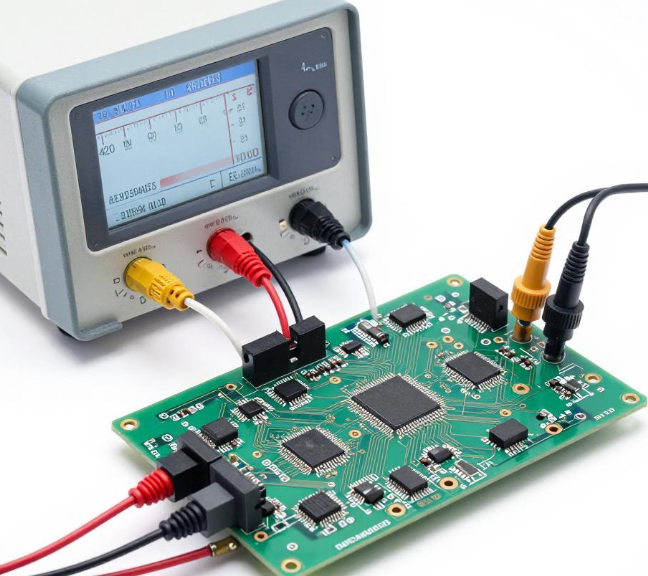
The essence of the withstand voltage test is to apply a high voltage several times higher than the working voltage between the PCB conductor and the conductor and the ground for a certain period of time to detect whether there is breakdown, flashover or over-threshold leakage current. It simulates extreme working conditions such as lightning surges, switching transient overvoltages, and electrostatic discharges during equipment operation, and verifies the safety margin of the insulation system. If the PCB withstand voltage is insufficient, it will cause leakage and interference signals, and at worst, it will break down and cause fire, causing personal and equipment safety accidents. Especially in high-reliability fields such as power supply, industrial control, new energy, and medical care, withstand voltage testing is a veto item.
From a physical perspective, the voltage resistance of a PCB is determined by the dielectric strength of the substrate, conductor spacing, surface cleanliness, and the thickness of the dielectric layer. The dielectric strength of FR-4 conventional plates is about 20-25kV/mm, and the withstand voltage of aluminum substrates is significantly lower than that of ordinary rigid plates due to the thin insulation layer (50-150μm). When the electric field exceeds the critical value of the material, the insulation layer is broken down, forming a conductive channel and causing irreversible damage. Voltage resistance testing is to expose material defects, design defects and process problems in advance through controlled high pressure.
The industry's common test standards are IPC-6012 (rigid boards), IPC-TM-650 (test methods) as the core, and are compatible with IEC 62368-1, UL 60950, GB 4943 and other safety standards. The test voltage calculation formula is industry common empirical value: test voltage = 2× operating voltage peak + 1000V, for example, 250V working voltage, test voltage is about 1500V. Strengthening insulation needs to be doubled on this basis, and the specific product safety level shall prevail. The standard test time is 60 seconds, and the mass production line can be shortened to 1-3 seconds for rapid testing, but the sampling must be performed for a full duration test. The leakage current threshold is usually set ≤ 1mA, and the high voltage plate can be relaxed to 5mA, and if it exceeds it, it will be judged as unqualified.
The test process is divided into four steps: pre-treatment, wiring, boost test, determination and discharge. Pretreatment requires the PCB to be balanced at 23±2°C and 50±5% RH environment for 24 hours to remove surface flux, dust, and oil to avoid contamination leading to misjudgment. When wiring, the high voltage is terminated to the conductor being tested, and the low voltage is terminated to another network or ground, and the probe needs to be in precise contact to avoid scratching the board surface. The step-up is stepped, and the rate does not exceed 100V/s to prevent instantaneous impact breakdown. After the test, it must be fully discharged to avoid residual charge injury or damage to the instrument.
The withstand voltage test is divided into two modes: AC and DC (DC). AC withstand voltage test is fast, suitable for mass production screening, and can detect overall insulation defects; DC withstand voltage can simultaneously measure leakage current and insulation resistance, which is suitable for reliability verification in high-voltage plates and humid and hot environments, and the two cannot be replaced at will. The test objects include: adjacent high-voltage and low-voltage lines, wiring and ground plane, wiring and metal shell, multilayer board inner and outer insulation and other key areas.
Many people confuse withstand voltage test with insulation resistance test, the core difference is: withstand voltage test breakdown ability, which is a destructive critical test; Insulation resistance measures insulation integrity and is a non-destructive long-term performance test. Unqualified withstand voltage means that the insulation layer has fatal defects, and low insulation resistance is mostly contaminated, damp or insufficient design spacing.
Voltage resistance testing is the first line of defense for PCB electrical safety, serving as both a standard requirement and a bottom line for quality. Understanding its principles and specifications can effectively avoid design risks and improve product reliability.
Get the latest price? We'll respond as soon as possible(within 12 hours)