


PCB High And Low Temperature Reliability Testing: Verification Of Board Life Under Thermal Stress
2026-04-03 16:25Temperature is the primary environmental factor affecting PCB reliability, from extremely cold outdoors in minus tens of degrees to high temperature inside the equipment at hundreds of degrees, the PCB is always in a stress environment of thermal expansion and contraction. PCB high and low temperature reliability testing evaluates the structural stability and electrical performance of circuit boards under thermal stress by simulating extreme temperature changes, and is the core test item of high-reliability PCBs in automotive electronics, military industry, and industrial control.
PCBs are composed of epoxy/polyimide substrates, copper foils, solders, ceramic components and other heterogeneous materials, and the coefficient of thermal expansion (CTE) of different materials varies greatly: the CTE of copper is about 17ppm/°C, the CTE of epoxy resin substrate is 13-50ppm/°C, the CTE of solder is about 25ppm/°C, and the CTE of ceramic components is only 6-8ppm/°C. When the ambient temperature changes, the materials will expand or contract at different rates, generating shear and tensile stresses at the interface junction. Short-term temperature changes cause less stress and will not cause obvious failure, but long-term repeated temperature cycling will continue to accumulate stress, eventually leading to fatigue damage to the PCB, which is the core principle of high and low temperature testing - accelerating thermal fatigue aging.
PCB high and low temperature testing is mainly divided into two categories: temperature cycling testing and cold and hot shock testing, and there are obvious differences in stress strength and application scenarios between the two. The temperature cycle test is the most commonly used high and low temperature verification method, the test equipment is a high and low temperature alternating test chamber, through the program to control the temperature to slowly switch between high and low temperature ranges, the temperature rise and fall rate is usually 1-5°C/min, the single temperature zone residence time is 15-30 minutes, simulating the mild temperature changes brought about by the start and stop of the equipment and the change of seasons. The general temperature range of the industry is -40°C~125°C, the number of cycles is 500-1000 times, consumer electronics can be simplified to -20°C~85°C, and automotive electronics need to meet the stringent requirements of -55°C~150°C.
Thermal and cold shock testing is an extreme thermal stress verification, allowing the PCB to quickly convert between the high temperature (125°C) and the low temperature (-55°C) through a two-box or three-box impact test chamber, with a conversion time of less than 1 minute, instantly applying huge thermomechanical stress and accelerating the exposure of potential defects in the PCB. This test is mainly used in extreme working conditions such as military, aerospace, and automotive engine compartment PCBs, and can quickly screen out products with insufficient thermal stability, and the test cycle is much shorter than the temperature cycle, but the damage to the PCB is also more severe.
The industry standard system for high and low temperature testing is perfect, including IPC-TM-650 2.6.7 (PCB temperature cycling test method), JEDEC JESD22-A104 (semiconductor and PCB solder joint temperature cycling standard), IEC 60068-2-14 (temperature change test); Domestic standards include GB/T 2423.22 (high and low temperature alternating test) and GJB 150.3A (high / low temperature test for military equipment). The special standard for automotive electronics is AEC-Q104, which clearly specifies the high and low temperature test parameters and failure criteria of automotive PCBs, which is the entry threshold for new energy vehicle PCBs.
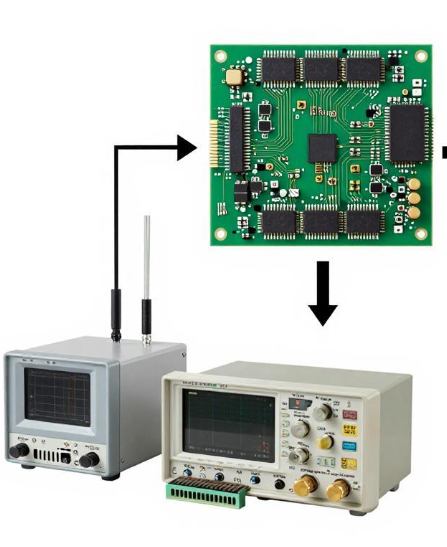
The testing process strictly follows the standardized steps: first, the sample is pre-tested, the initial on-resistance, insulation resistance, and impedance values of the PCB are recorded using a multimeter and LCR tester, and the visual inspection and X-ray scanning are used to confirm that there are no initial solder joint cracks or substrate defects; Then fix the PCB in the test chamber tooling to avoid shifting during the test, and set the temperature range, temperature rise and fall rate, and number of cycles according to the standard. During the test, the electrical performance changes can be recorded in real time through the online monitoring equipment, and comprehensive testing is carried out after the test is completed, including visual inspection (solder mask blistering, substrate delamination, component cracking), X-ray inspection (BGA solder joints, internal cracks in through holes), and electrical performance testing (resistance change rate ≤5%, insulation resistance ≥100MΩ).
The typical failure modes of PCBs in high and low temperature environments are mainly concentrated in three parts: solder joints, through holes, and substrates. Under the thermal cycle stress, the interface between the pad and the solder is prone to microcracks, and with the increase of the number of cycles, the cracks continue to expand, eventually leading to solder joint breakage, especially the solder joints of packaged devices such as BGA and QFN, which are more prone to failure due to stress concentration. The through-hole failure of multi-layer PCB is connected to different inner layer lines, and the axial stress generated by thermal expansion and contraction will pull the copper hole, resulting in cracking of the copper layer and line breakage. Substrate failure includes resin delamination, glass fiber fracture, and solder mask peeling, mainly due to improper substrate selection or process pressing process defects.
For the failure problem of high and low temperature, it can be optimized to improve reliability from three aspects: design, material and process. In terms of material selection, high-reliability PCBs use high-frequency and high-speed substrates with low CTE (such as Rogers and Shengyi high-frequency materials) to reduce thermal expansion differences. The solder joints are made of solder alloy with better toughness, and the design of the pad is optimized to increase the stress area of the solder joint. In terms of structural design, avoid placing large-sized components in the stress concentration area of the PCB, add stiffeners or fixing holes, and reduce the amplitude of thermal deformation. The through-hole is designed with thickened copper and blind buried holes to improve tensile resistance. In terms of process technology, the pressing temperature and pressure are strictly controlled to ensure the bonding force between the layers of the substrate, optimize the temperature curve of reflow soldering, and reduce the residual stress inside the solder joint.
With the development of high-density PCB integration, the high and low temperature reliability challenges of 3D-MID, rigid-flex boards, and ultra-thin PCBs are intensifying. The CTE of the rigid and flexible regions of the rigid and rigid bonded plates is very different, and the bonding fracture is prone to occur under thermal cycling. The substrate rigidity of ultra-thin PCBs is insufficient, and it is easy to warp and deform at high temperatures, affecting the soldering stability of components. For these new PCBs, the high and low temperature test parameters need to be customized, using a gentler temperature rise and fall rate, increasing the number of cycles, and ensuring their stability in extreme temperature environments.
High and low temperature testing is not only a means of verifying product quality, but also an important basis for R&D optimization. Failure analysis can accurately locate material and process defects and guide PCB design upgrades in reverse.
Get the latest price? We'll respond as soon as possible(within 12 hours)